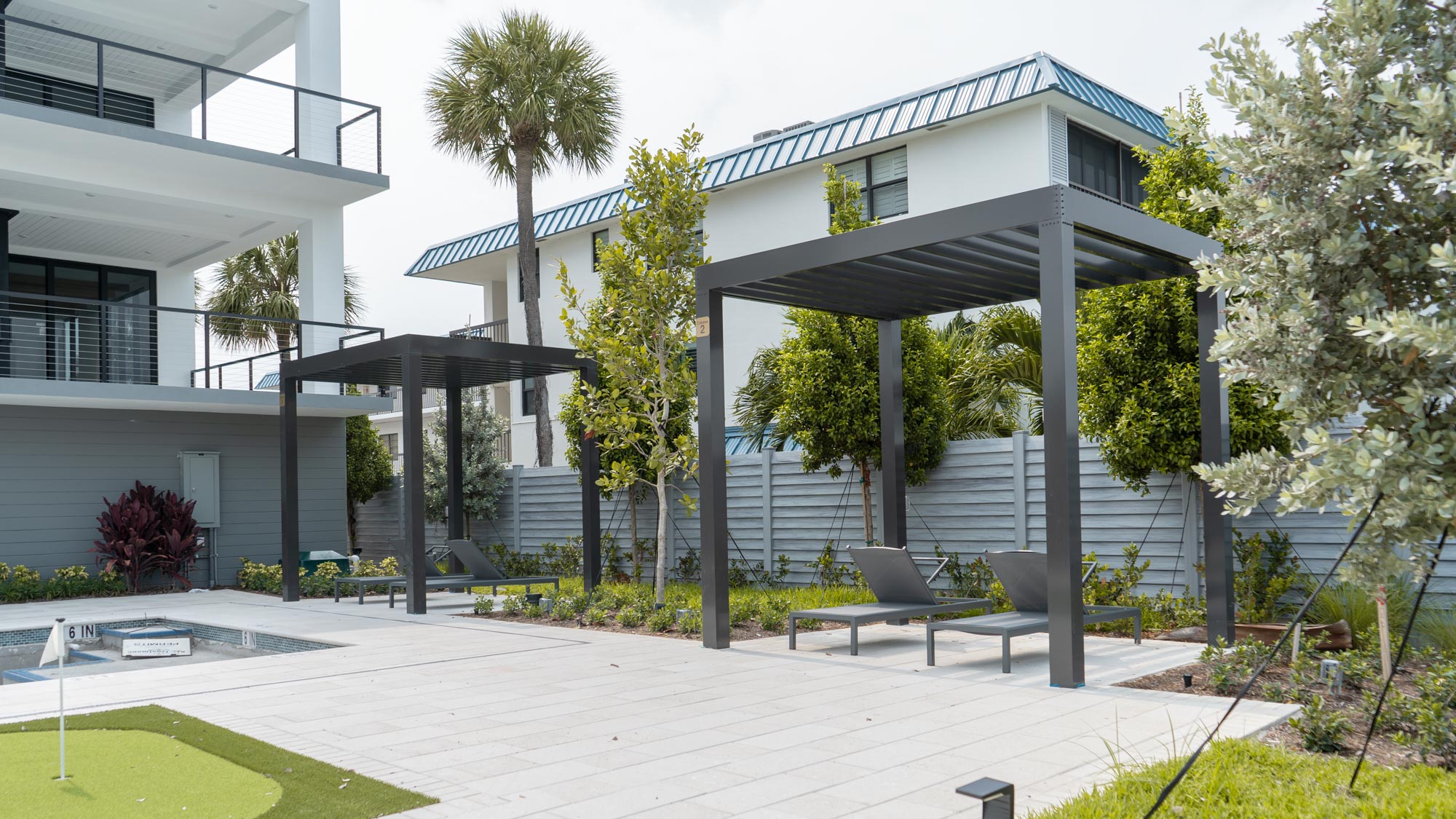
Best Pergola Materials for South Florida Weather
Best Pergola Materials for South Florida Weather
South Florida is one of the most beautiful places to have an outdoor living space. It is also one of the hardest climates on building materials. Between the intense UV exposure, high humidity, heavy rain season, and salt air in coastal areas, not every pergola material is built for what this region will throw at it.
If you are planning a pergola in Miami-Dade or Broward, material choice is not a secondary decision — it is the most important one you will make. The wrong material means warping, fading, rust, and repairs within a few years. The right material means a structure that looks great and holds up for decades.
Here is a straight breakdown of the most common pergola materials and how they actually perform in South Florida conditions.
The Best Pergola Material for South Florida: Aluminum Insulated Panel
If you ask us directly, aluminum insulated panel pergolas are the clear number one choice for South Florida homeowners. This is what we recommend most, build most, and stand behind most.
Here is why.
Built to handle the climate. Aluminum does not rot, warp, rust, or absorb moisture. In a region where humidity and rain are constants, that matters enormously. Wood absorbs water. Vinyl can expand and shift in extreme heat. Aluminum holds its shape and its finish through all of it.
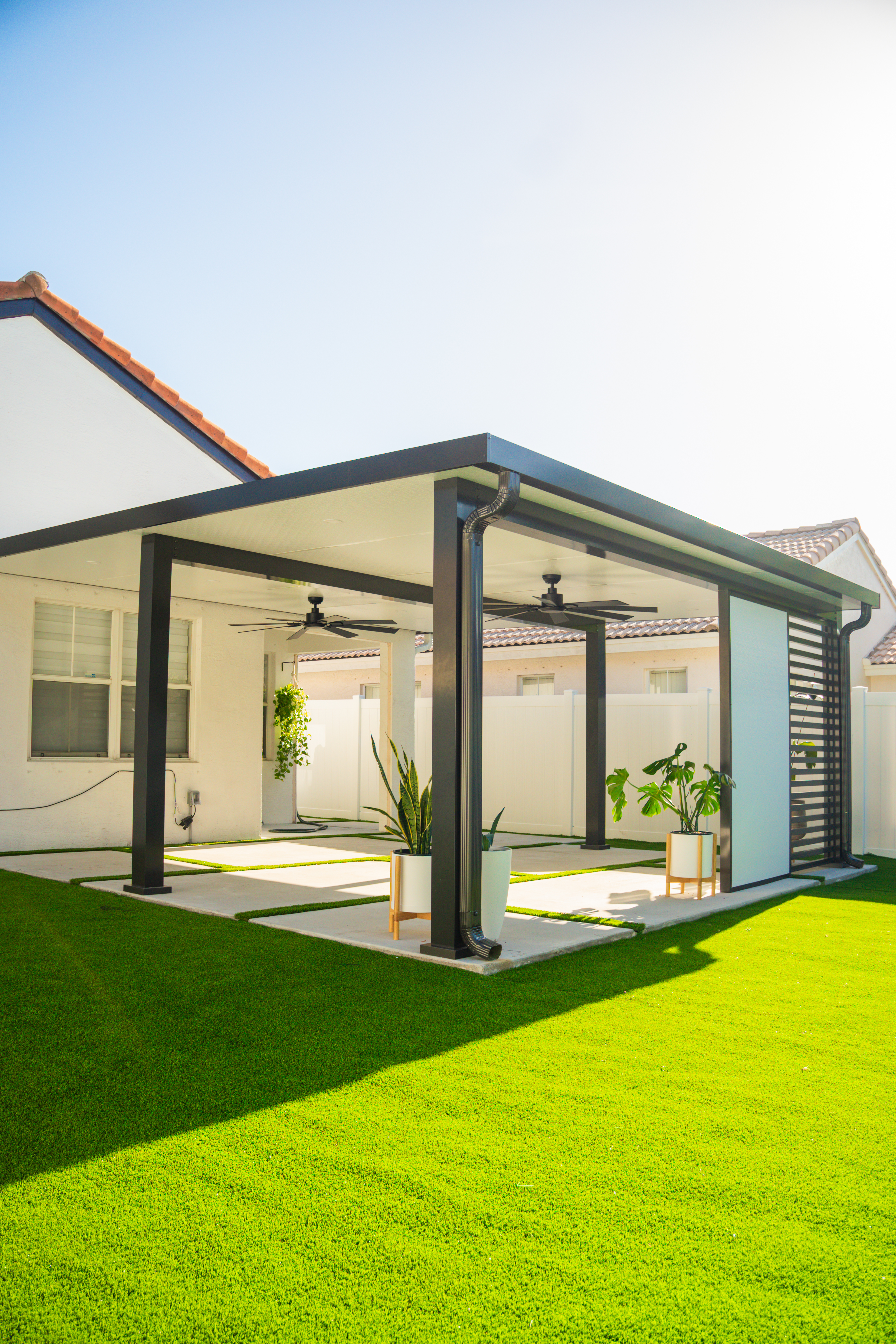
The insulated panel is a game changer. Unlike open-beam pergolas that offer shade without real cover, an aluminum insulated panel pergola has a fully closed roof system. The insulated core keeps the space underneath noticeably cooler than open designs. In South Florida, where summer temperatures push well past 90 degrees, that difference is felt immediately. You actually want to be under it.
Low maintenance, long lifespan. Once installed, an aluminum insulated panel pergola requires almost no upkeep. There is no staining, sealing, sanding, or repainting. A rinse with a hose is typically all it needs. In a climate that degrades materials aggressively, low maintenance is a real advantage.
Clean, modern aesthetic. These structures have a sharp, finished look that complements newer South Florida homes. They can be powder-coated in a range of colors to match your home's exterior, and they photograph well — which matters for resale and for anyone building content around their property.
Permits and code compliance. A properly installed aluminum insulated panel pergola from a licensed contractor will meet Miami-Dade and Broward building codes. At Concrete Designs LLC, we handle permitting as part of the process so the structure is fully above board.
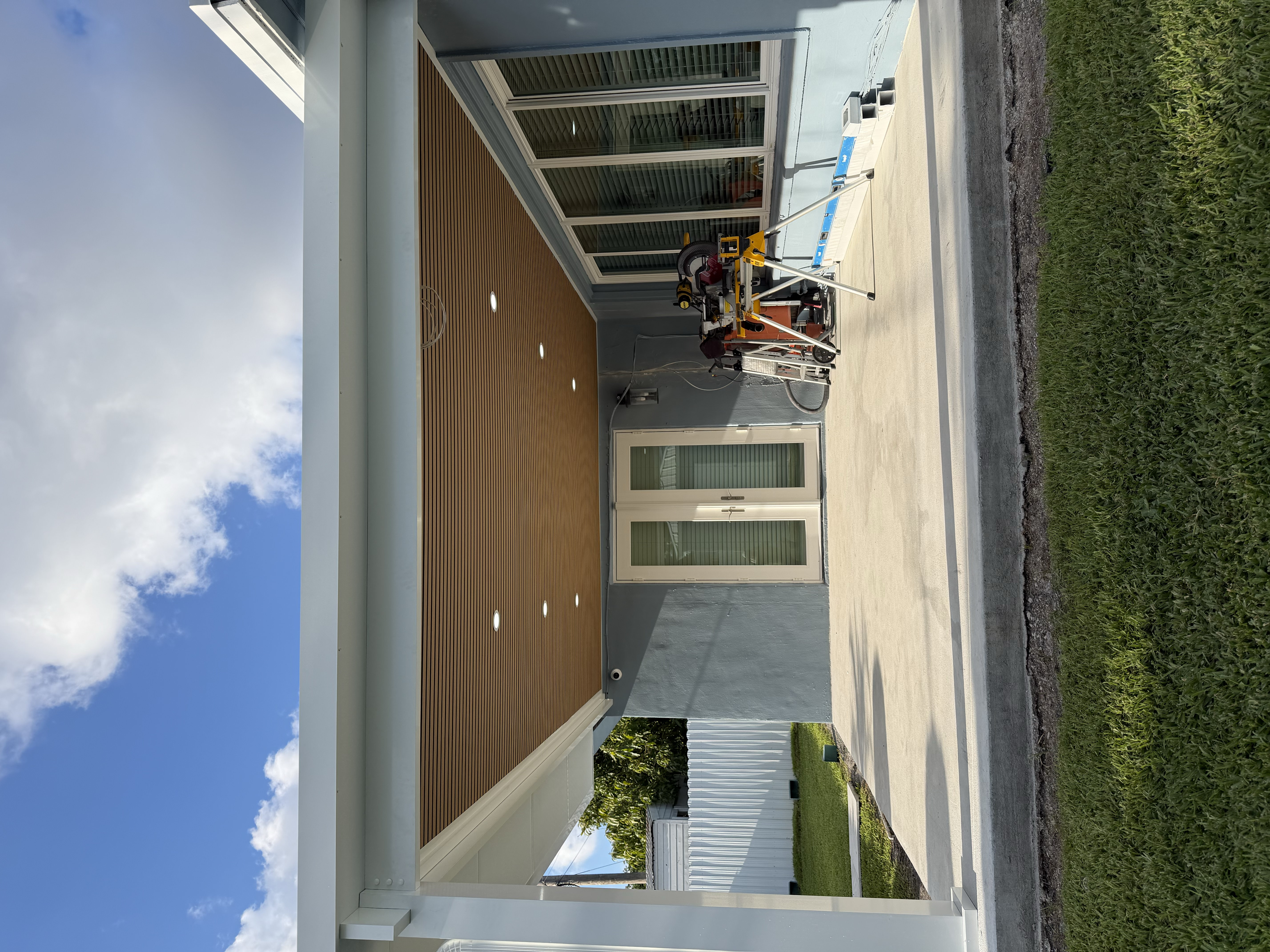
Other Pergola Materials: How They Compare
Understanding why aluminum wins is easier when you see how other common materials stack up in this climate.
Wood
Wood pergolas look beautiful in photos and in cooler, drier climates. In South Florida, they require constant maintenance. The heat and humidity accelerate decay, and without regular staining or sealing, wood will crack and rot faster than most homeowners expect. Pressure-treated wood holds up better than untreated, but it still demands attention and will eventually show its age. For homeowners who love the look of wood, composite or aluminum with a wood-grain finish delivers a similar aesthetic without the upkeep.
Vinyl
Vinyl is often marketed as a low-maintenance alternative to wood. In moderate climates it can be. In South Florida, vinyl expands and contracts significantly with temperature swings and can become brittle over time with sustained UV exposure. It tends to yellow and fade. While the upfront cost can be lower, the lifespan in this region rarely justifies the investment compared to aluminum.
Steel
Steel pergolas are strong and can support heavier loads, but in a coastal or humid environment, rust is a real concern unless the steel is powder-coated and properly maintained. Even with a good finish, ongoing exposure to salt air and heavy rain creates long-term maintenance challenges that aluminum simply avoids.
Composite
Composite materials have improved significantly and perform better than wood in humid conditions. They hold up reasonably well in South Florida and require less maintenance than wood. However, they typically cost more than wood and still do not match the performance, longevity, and thermal benefits of an aluminum insulated panel system.
What to Look for When Choosing a Pergola in South Florida
Beyond material, here are a few factors that matter when planning a pergola in Miami-Dade or Broward.
Roof system. An open-beam pergola offers shade but not protection from rain. A louvered or fully closed insulated roof system gives you a usable space year-round, which is a significant difference in Florida's rainy season.
Permitting. Any permanent structure in Miami-Dade or Broward will likely require a permit. A contractor who skips that step is putting you at risk. Always confirm your contractor is licensed and pulling the right permits for the job.
Attachment vs. freestanding. Attached pergolas connect directly to the home and extend your living space outward. Freestanding pergolas can be placed anywhere in the yard and work well as standalone shade structures near pools or outdoor kitchens. Both are excellent options — the right choice depends on your layout and how you plan to use the space.
Foundation. The pergola is only as solid as what it sits on. Whether you are installing on an existing patio slab, new concrete, or pavers, the base needs to be properly prepared. At Concrete Designs LLC, we assess the existing surface and build the foundation right before anything goes up.
For more on our pergola installations across South Florida, visit our service page.
Financing Your Pergola Project
A quality aluminum insulated panel pergola is an investment, and it is one that pays off in comfort, aesthetics, and home value. If you want to move forward without paying everything upfront, Concrete Designs LLC offers financing through Wisetack and Wells Fargo. These options let South Florida homeowners start the project now and spread the cost over time in a way that fits their budget.
The Bottom Line
South Florida demands materials that can take a beating. When it comes to pergolas, aluminum insulated panel systems are the clear winner for this climate — they are durable, low-maintenance, thermally efficient, and built to last without constant upkeep.
If you are ready to add a pergola to your outdoor space in Miami-Dade or Broward, Concrete Designs LLC designs and builds structures that hold up and look the part. Every project starts with a 3D design so you can see the finished product before we break ground, and our team is fully licensed and insured.
Frequently Asked Questions
Why is aluminum insulated panel the best pergola material for South Florida specifically? South Florida's combination of heat, humidity, heavy rain, and salt air is extremely tough on building materials. Aluminum does not rot, rust, warp, or absorb moisture, which makes it uniquely suited for this climate. The insulated panel roof adds another advantage — it keeps the space underneath significantly cooler than open-beam designs, which is a meaningful benefit when summer temperatures regularly exceed 90 degrees. No other material offers the same combination of durability, low maintenance, and thermal performance for this region.
Do I need a permit to build a pergola in Miami-Dade or Broward County? In most cases, yes. Any permanent attached or freestanding structure that meets certain size thresholds will require a permit in Miami-Dade and Broward County. The specific requirements vary by municipality, so it is important to work with a licensed contractor who knows the local codes. Concrete Designs LLC is licensed in both counties and handles the permitting process as part of every applicable project.
How long does an aluminum insulated panel pergola last in South Florida? When properly installed by a licensed contractor, an aluminum insulated panel pergola can last 20 to 30 years or more in South Florida conditions. Because aluminum does not degrade the way wood, vinyl, or steel does in high humidity and UV exposure, the structure maintains its integrity and appearance with minimal maintenance over its lifespan. Routine cleaning is typically all that is needed to keep it looking sharp.


