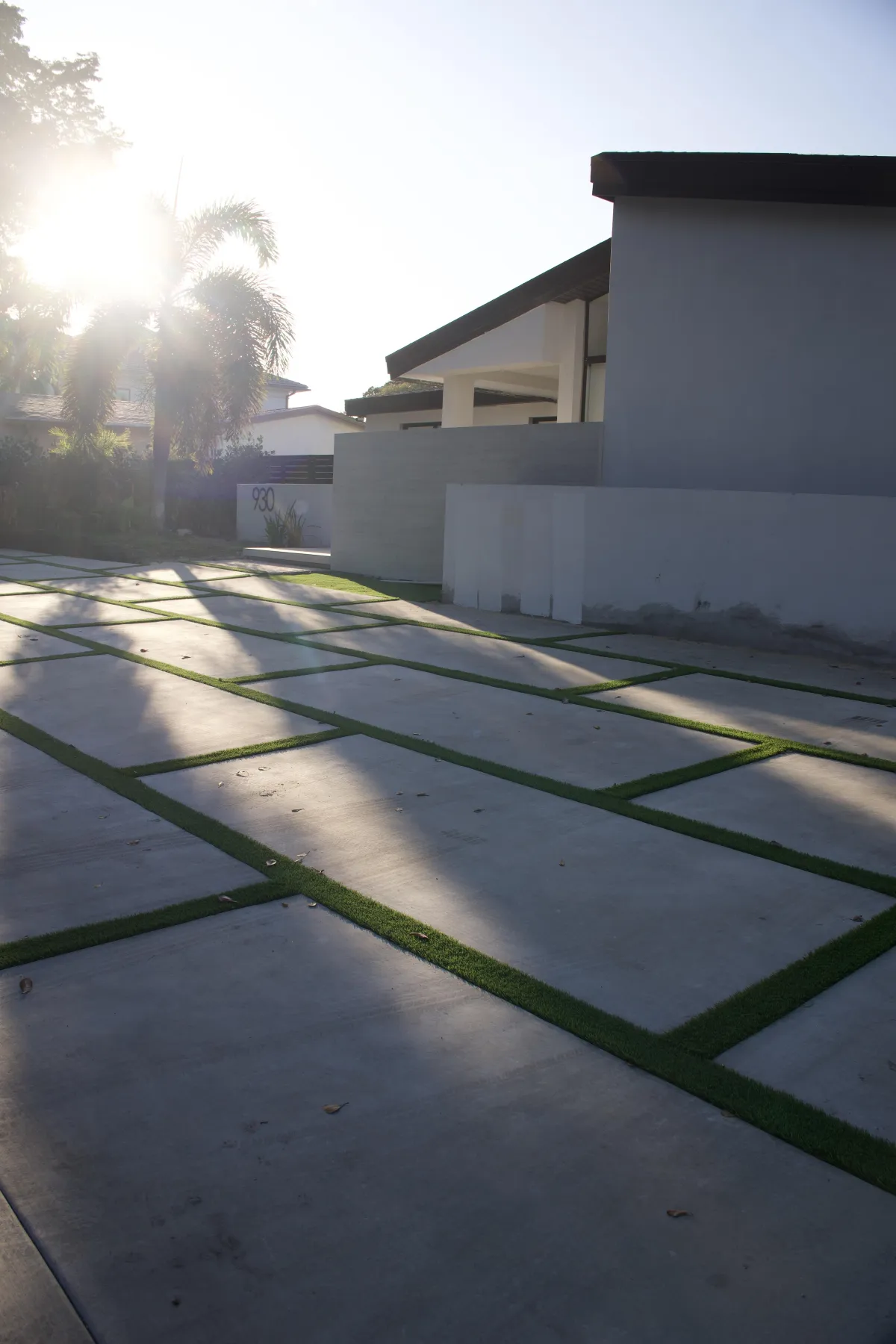
Signs It's Time to Replace Your Concrete Driveway
Signs It's Time to Replace Your Concrete Driveway
Most homeowners do not think about their driveway until something goes wrong. A crack appears. The surface starts looking rough. Water pools in spots it never used to. And then comes the question that nobody has a clear answer for — do I repair this or replace it?
It is a fair question, and the answer is not always obvious. Repairs make sense in some situations. In others, patching a deteriorating driveway is money spent delaying the inevitable. Knowing which situation you are in saves you from making an expensive mistake in either direction.
Here are the signs that point clearly toward replacement — and what to do when you see them on your South Florida driveway.
Sign #1: Multiple Cracks That Are Spreading
A single hairline crack is not automatically a crisis. Concrete expands and contracts with temperature, and minor surface cracks are a normal part of any slab's life. The concern starts when cracks multiply, widen, or begin spreading across the surface in a pattern.
Wide cracks — anything you can fit a finger into — indicate that the slab has shifted or the base underneath has failed. Cracks that run in a spiderweb or alligator pattern across a large section of the driveway signal structural breakdown that patching cannot fix long-term. The underlying cause is still there, and new cracks will follow.
In South Florida, heavy rainfall, soil erosion, and tree root growth accelerate this process. If your driveway is developing a network of cracks rather than isolated ones, replacement is the more economical path forward.
Sign #2: Sinking or Uneven Sections
A driveway that is visibly uneven — where one section sits lower or higher than adjacent sections — has a base problem. The soil beneath the slab has shifted, eroded, or settled unevenly. This is common in South Florida's sandy soil, particularly in areas with heavy rainfall or mature tree roots that have grown under the slab.
Uneven sections create more than an aesthetic issue. They are a trip hazard, they cause water to drain incorrectly, and they put stress on vehicles driving over the transition points. Filling in the surface does not fix the base. The slab needs to come up, the base needs to be corrected, and new concrete needs to be poured properly.
Sign #3: Drainage Problems That Did Not Used to Exist
A properly installed driveway is sloped to move water away from the home and toward the street or designated drainage areas. If you are noticing water pooling on your driveway after rain in spots that used to drain fine, the slab has shifted enough to change the slope.
Poor drainage is not just a nuisance. Water that pools near the garage or home foundation creates long-term moisture issues that go well beyond the driveway. And in South Florida's rainy season, a driveway that holds standing water is a problem that shows up every few days for months at a time.
If drainage issues have developed gradually over time, it is a sign the slab has moved and the slope can no longer be corrected without starting fresh.
Sign #4: Surface Deterioration Beyond Cosmetic
Pitting, scaling, and spalling — where the surface layer flakes away and exposes the aggregate underneath — is different from surface discoloration or minor staining. Once the top layer of concrete begins breaking down, water infiltrates the slab more easily, accelerating the damage from the inside out.
In South Florida, UV exposure, heat cycling, and occasional freeze events during cold snaps all contribute to surface deterioration over time. Resealing can protect a surface that is still structurally intact. It cannot reverse a surface that has already begun to degrade.
If your driveway surface is pitting, flaking, or showing exposed aggregate across a significant area, you are past the point where a coat of sealer resolves the issue.
Sign #5: The Driveway Is More Than 25 to 30 Years Old
Concrete driveways have a lifespan. In South Florida's climate — heat, UV, heavy rain, and soil conditions — a well-built driveway typically performs well for 25 to 30 years with proper maintenance. Beyond that range, deterioration accelerates regardless of how well it has been maintained.
If your driveway is in that age range and showing any of the signs above, the math usually favors replacement over continued repairs. At some point, repair costs stack up faster than a single replacement investment would have.
Sign #6: You Have Had It Repaired Multiple Times
One or two repairs over the life of a driveway is normal. If you have patched the same areas repeatedly, or if you have had multiple sections repaired in recent years, the slab is telling you something. The underlying cause — base failure, soil movement, or simply age — has not been resolved by surface repairs.
At some point, continued patching costs more than it saves. A licensed contractor can assess whether you are at that point or still have productive life left in the slab.
Repair vs. Replace: How to Think About It
The general rule is straightforward. If damage is isolated to a small section of an otherwise sound slab, repair is reasonable. If damage covers more than a third of the driveway, if the base has failed, if drainage has changed, or if the slab is at the end of its service life — replacement is the right call.
A repaired driveway on a failed base is a short-term fix on a long-term problem. A new slab built on a properly prepared base gives you 25 or more years before you have this conversation again.
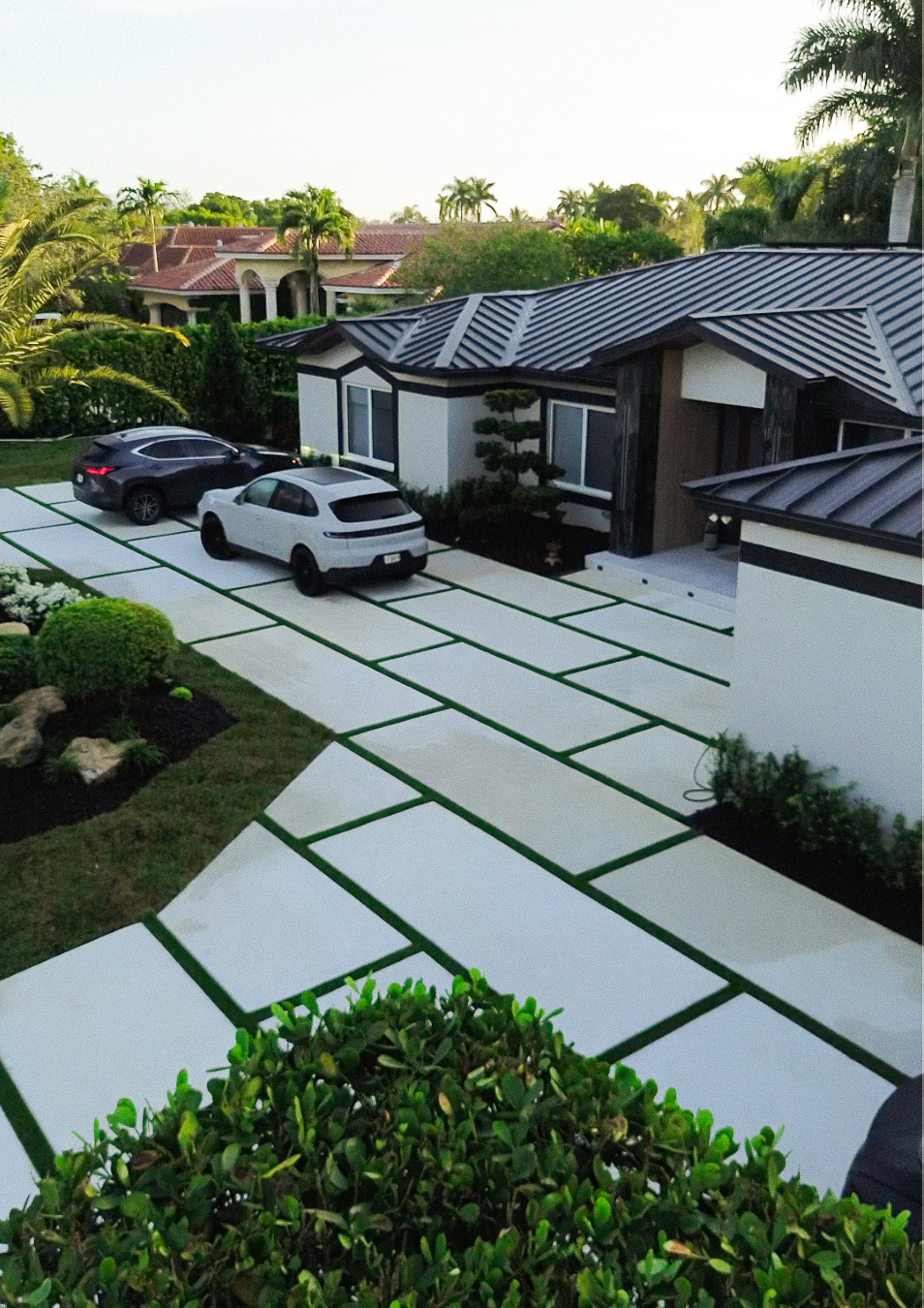
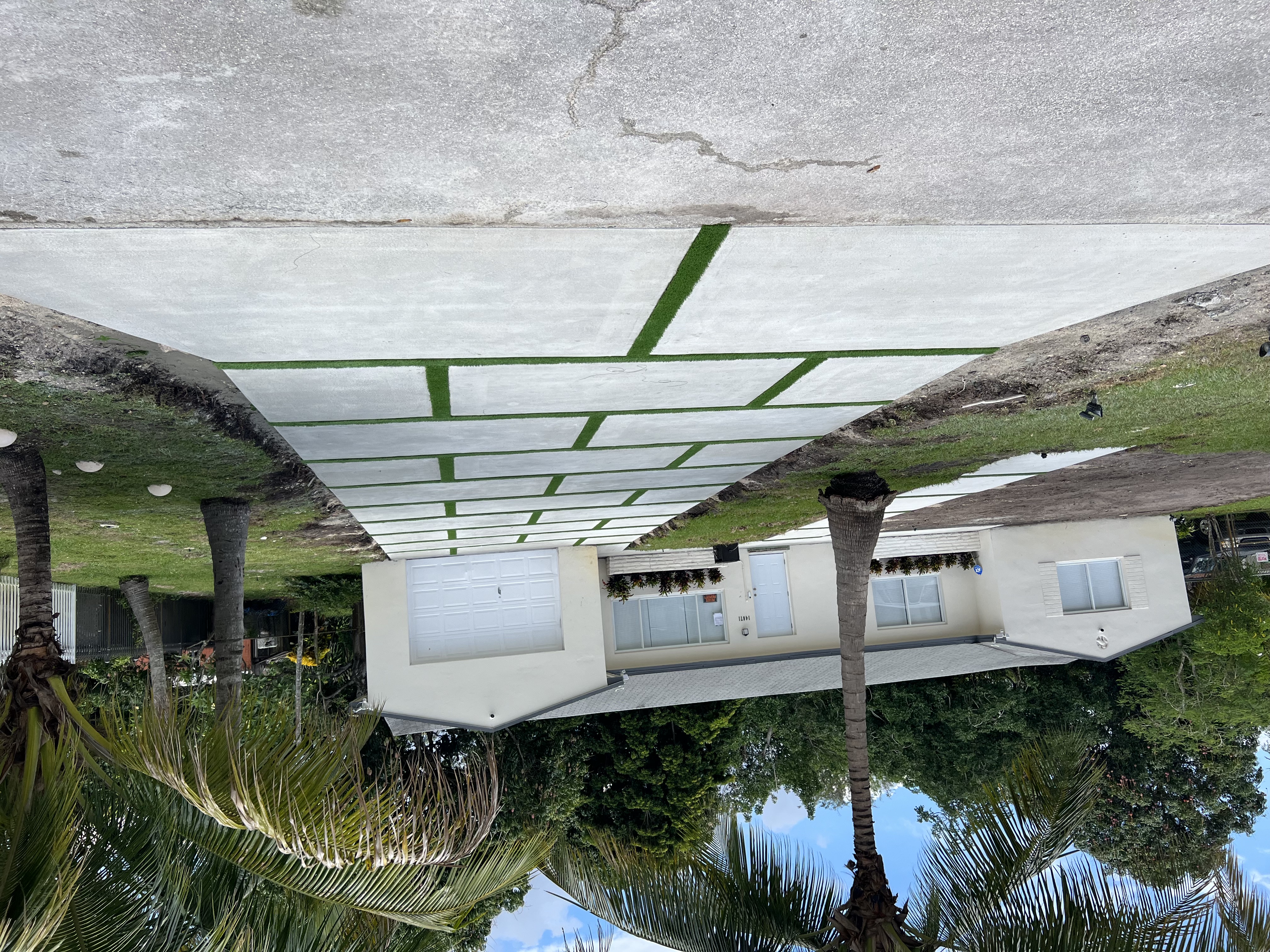
At Concrete Designs LLC, we assess every driveway honestly. If a repair will genuinely solve the problem, we will tell you. If replacement is the smarter path, we will tell you that too — and show you exactly what the finished product will look like with a full 3D design before we start.
We serve homeowners across Miami and throughout Miami-Dade and Broward County. Every project is handled by a licensed and insured team that pulls proper permits and builds driveways that hold up in South Florida's demanding climate.
Financing Your Driveway Replacement
A driveway replacement is a meaningful investment, and it does not have to come out of pocket all at once. Concrete Designs LLC offers financing through Wisetack and Wells Fargo, so South Florida homeowners can move forward on a full replacement without paying the entire cost upfront. Both options let you start now and manage the cost over time.
Do Not Wait Until It Gets Worse
Driveway problems do not fix themselves. Cracks widen, uneven sections sink further, and drainage issues compound over time. The sooner you address a deteriorating driveway, the more control you have over the timing and the budget.
If your driveway is showing any of the signs above, the right first step is a free estimate from a licensed contractor who can give you an honest assessment and a clear picture of your options.
Frequently Asked Questions
How do I know if my concrete driveway needs repair or full replacement in South Florida? The key factors are the extent of the damage, the condition of the base underneath, and the age of the slab. Isolated cracks on an otherwise sound slab with good drainage may be candidates for repair. Widespread cracking, sinking sections, drainage changes, or a slab that is 25 or more years old typically point toward replacement. A licensed contractor can assess the base condition — which is often the deciding factor — and give you an honest recommendation based on what they actually find.
How long does a new concrete driveway last in Miami-Dade or Broward County? A properly installed concrete driveway in South Florida — with a correctly prepared base, appropriate thickness, and quality mix design — typically lasts 25 to 30 years or more. South Florida's heat, UV, and heavy rainfall put more stress on concrete than cooler climates, which is why base preparation and proper installation matter so much here. Driveways installed by unlicensed contractors who cut corners on the base or concrete mix tend to show problems significantly earlier.
What happens if I ignore cracks and uneven sections on my driveway? Ignoring driveway damage does not stop the progression — it accelerates it. Cracks allow water to penetrate the slab, which erodes the base underneath and causes further settling and cracking. Uneven sections put continued stress on the slab at the transition points. In South Florida's rainy season, water infiltration through untreated cracks is particularly aggressive. What might have been a straightforward repair or targeted section replacement can become a full driveway failure if left unaddressed for too long.


